Bromine is essential to a wide range of industrial processes: flame retardants, agrochemical active ingredients, pharmaceutical intermediates, dye chemistry, and water treatment chemicals all depend on it. The challenge is that bromination reactions — by their chemistry — cannot fully incorporate all the bromine added into the desired product. The remainder leaves as HBr gas dissolved in water, sodium bromide (NaBr), potassium bromide (KBr), or mixed bromide solutions in process washings and effluent.
For Indian agrochemical manufacturers, dye producers, and fine chemical companies, this bromide waste stream represents a significant, avoidable cost. Recovering and recycling even 50% of process bromine can transform the economics of a production line.
Where Does Bromine Enter Effluent in Indian Industry?
The specific source of bromide waste varies by industry but the recovery principle is the same across all of them. Understanding your source is step one in designing an efficient recovery system.
| Industry | Bromine Source | Typical Form | Concentration Range |
|---|---|---|---|
| Agrochemicals | Bromination reactions for pesticide/herbicide synthesis | HBr, NaBr, KBr in aqueous waste | 5–40 g/L Br |
| Dye & Intermediates | Brominated dye intermediates, dibromide chemistry | NaBr, HBr in spent acid | 10–60 g/L Br |
| Flame Retardants | Polybrominated compound synthesis | HBr, NaBr, KBr | 15–80 g/L Br |
| Pharmaceuticals | Brominated API intermediates | NaBr, KBr in mother liquors | 2–20 g/L Br |
| Water Treatment | Bromine-based biocides, spent regeneration | NaBr solution | 5–25 g/L Br |
How Bromine Recovery Works: Reactive Stripping
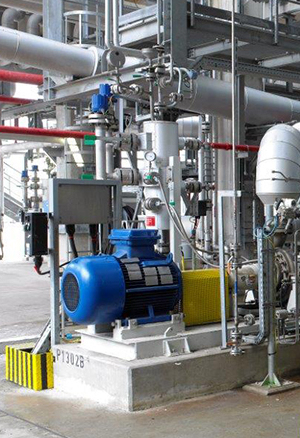
The core technology for bromine recovery from aqueous waste streams is reactive stripping — a process that converts dissolved bromide ions back into elemental bromine (Br₂) and strips it from the solution using steam.
Feed Pre-Treatment & Organic Removal
Bromide-containing waste streams often carry organic impurities from the synthesis process. These must be removed before entering the stripping column — typically via activated carbon adsorption or chemical oxidation — because organics can contaminate the recovered bromine product and create corrosion problems in the recovery equipment. pH adjustment to the mildly acidic range ensures bromide is in the optimal form for oxidation.
Chlorine Oxidation of Bromide to Elemental Bromine
Chlorine gas (Cl₂) is introduced into the feed stream in the stripping column. Chlorine oxidises dissolved bromide ions (Br⁻) to elemental bromine (Br₂) in an exothermic reaction. The reaction is rapid, selective for bromide over other anions, and occurs at ambient to mildly elevated temperature. The stoichiometry of chlorine addition is carefully controlled to avoid excess chlorine in the product stream.
Steam Stripping
Live steam is introduced at the base of the stripping column. The steam vapour carries elemental bromine (which has a relatively high vapour pressure) upward through the column and out as a bromine-rich vapour stream. The stripped aqueous solution — now depleted of bromine — exits from the base of the column for further treatment or disposal. The entire stripping column and associated pipework is constructed from corrosion-resistant materials (glass-lined, PVDF, or Tantalum-clad) due to bromine's highly corrosive nature.
Bromine Condensation & Collection
The bromine-steam vapour mixture is cooled in a glass or PVDF-lined condenser. Bromine (boiling point 59°C) condenses to liquid while the steam condenses separately. The crude liquid bromine is collected in a receiver vessel — at this stage, purity is typically 95–98%. A vent condenser captures any residual bromine vapour, preventing atmospheric emissions and recovering additional product.
Distillation to Final Purity
Crude bromine is purified in a glass distillation column to remove residual water, chlorine, and organic impurities. The final product achieves 99.5%+ purity, meeting IS 2142 (Indian Standard for bromine) requirements. The purified bromine is cooled, transferred to corrosion-resistant storage vessels (glass-lined or lead-lined), and certified for sale or in-process reuse. Dry bromine (moisture <0.01%) can be produced for sensitive applications if required.
Economics of Bromine Recovery in India
The economics of bromine recovery are driven by two factors: the concentration of bromide in the feed stream and the market price of recovered bromine. Both are favourable for Indian agrochemical and specialty chemical producers.
| Feed Concentration | Daily Flow | Br Recovery Rate | Recovered Br/day | Annual Revenue |
|---|---|---|---|---|
| 20 g/L Br (NaBr) | 50 KLD | 85% | ~850 kg/day | ₹2.5–4 cr/year |
| 40 g/L Br (HBr) | 30 KLD | 90% | ~1,080 kg/day | ₹3.2–5 cr/year |
| 10 g/L Br (mixed) | 100 KLD | 80% | ~800 kg/day | ₹2.4–3.7 cr/year |
Safety & Materials of Construction
Bromine is among the most corrosive industrial chemicals — it attacks metals, plastics, and most elastomers. A bromine recovery system that is not correctly specified for materials of construction will fail rapidly and dangerously. Geist Research specifies the full system in corrosion-resistant materials:
- Stripping column: Glass-lined steel or borosilicate glass, PVDF-lined with Tantalum internals for high-temperature zones
- Heat exchangers: Glass tube/shell or Tantalum-clad construction
- Pipework & valves: PVDF, Hastelloy C-276, or glass-lined steel
- Storage vessels: Glass-lined steel with lead-lined internal coating, or PVDF-lined
- Instrumentation: Bromine-compatible transmitters, corrosion-resistant fittings throughout
Is Bromine Recovery Viable at Your Plant?
Geist Research designs and commissions bromine recovery systems for agrochemical, dye, pharmaceutical, and specialty chemical manufacturers across India.
Request Bromine Recovery Assessment Contact Our EngineersGeist Case Studies
Related Inorganic Recovery Projects
While bromine recovery is the primary focus, Geist routinely recovers multiple chemicals from the same agrochemical and specialty chemical waste streams.

Agrochemical process effluent → purified ammonium sulphate. Often recovered alongside bromine from the same waste stream, maximising per-litre recovery value.

Ammonia and sodium sulphate co-recovered from fertiliser process effluent — both returned to productive use, reducing input costs and effluent complexity.

Sodium sulphate recovered as a co-product from agrochemical effluent. Demonstrates how secondary salt recovery can fund primary chemical (bromine) recovery capex.